
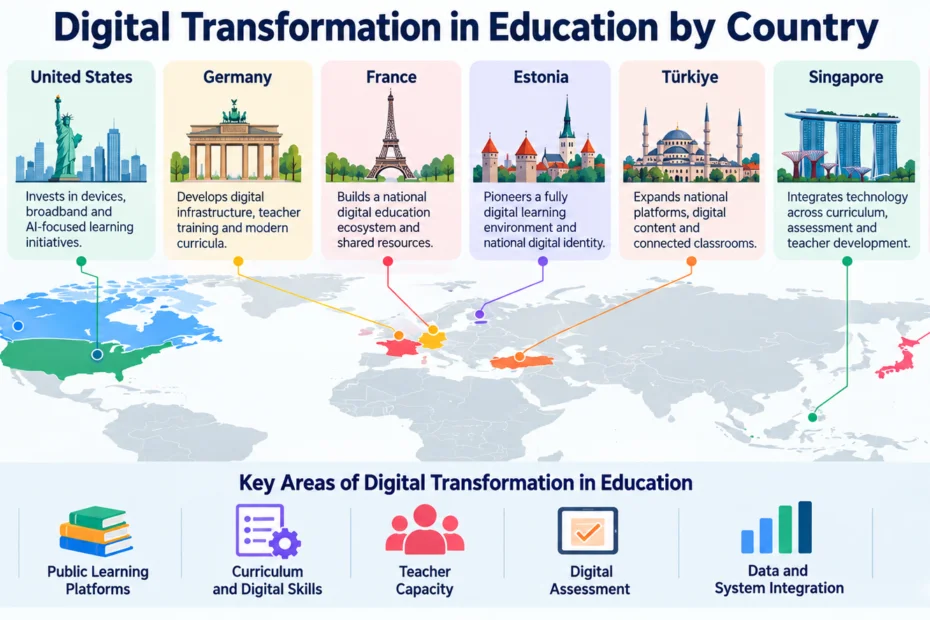
Digital Transformation in Education by Country
Digital transformation in education is compared by country through infrastructure, policy, classroom technology, access gaps and implementation challenges.
Digital transformation in education is compared by country through infrastructure, policy, classroom technology, access gaps and implementation challenges.
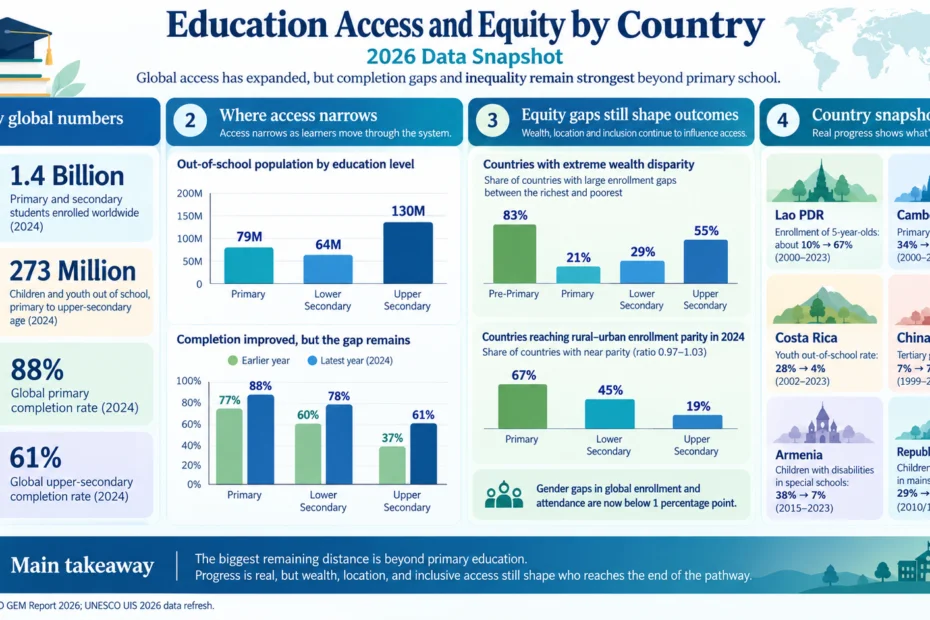
Education access in 2026 is best described as a multi-stage pathway, not a single enrollment rate. A country may have near-universal primary participation while still showing large losses before upper secondary completion, wide differences between richer and poorer households, or uneven access between rural and urban communities. UNESCO’s…
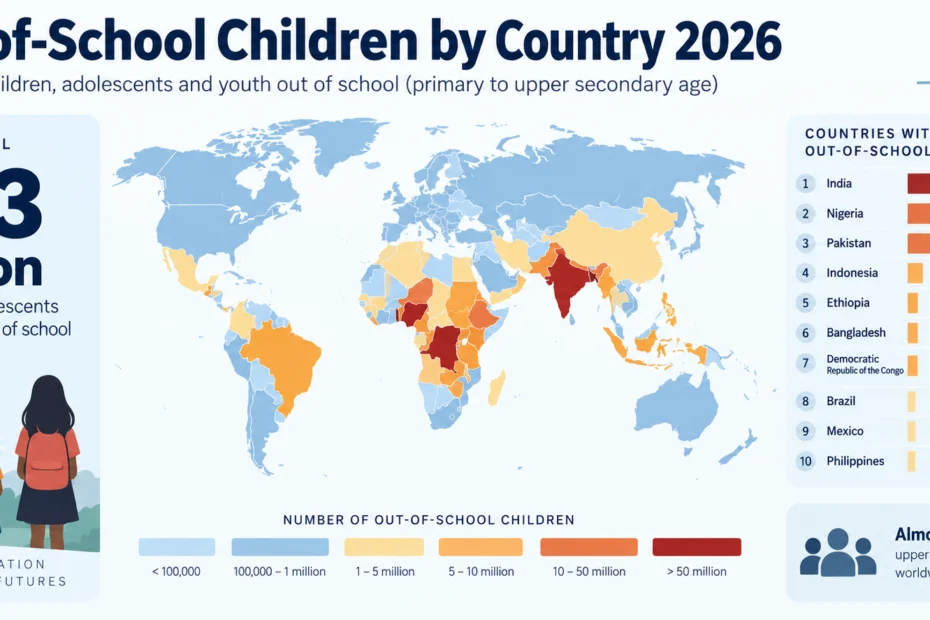
The latest global estimate places 273 million children, adolescents, and youth out of school in 2024. The figure appears in UNESCO’s 2026 Global Education Monitoring reporting and covers the official age groups for primary, lower secondary, and upper secondary education. It is therefore a 2024 reference-year estimate published…
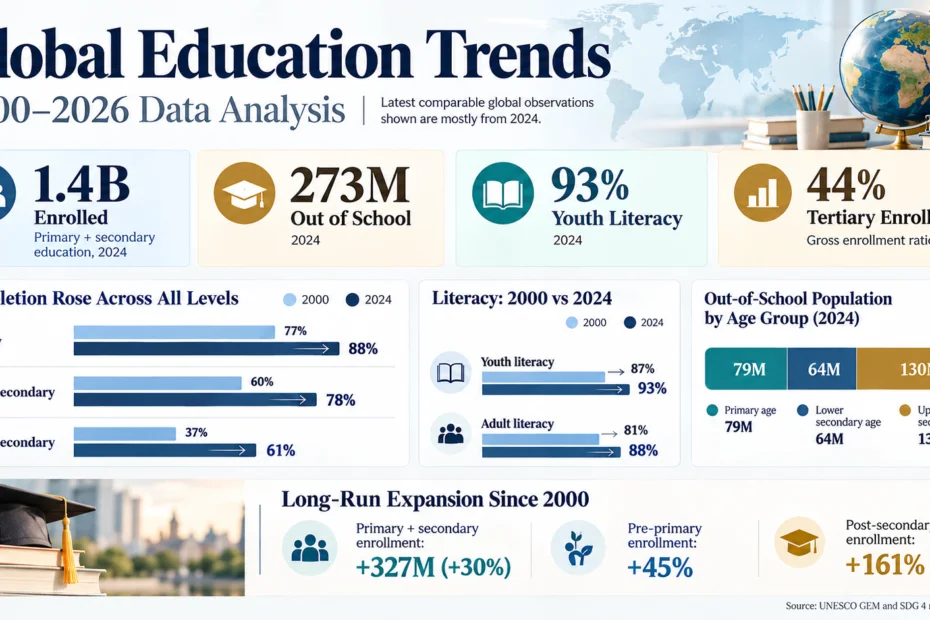
Global education trends from 2000 to 2026 are assessed through long-run data on participation, literacy, technology, spending and changing system priorities.