Education Systems by Country
Education systems by country differ in school starting ages, compulsory education, grade structures, examinations, vocational pathways, university admission, and the way education is governed. An education system by country profile therefore needs to show both the sequence of school levels and the transition points that determine how students move between them.
The education by country profiles below cover primary and secondary schooling, compulsory years, major qualifications, vocational education, higher education, and available performance indicators. School systems by country may use similar labels while organizing the same stage differently, so each profile explains the national structure rather than assuming that terms such as primary school, high school, college, or vocational education mean the same thing everywhere.
Choose a country to open its full education profile, or compare two education systems side by side.
Browse Education Systems by Country A–Z

How Education Systems Differ Between Countries
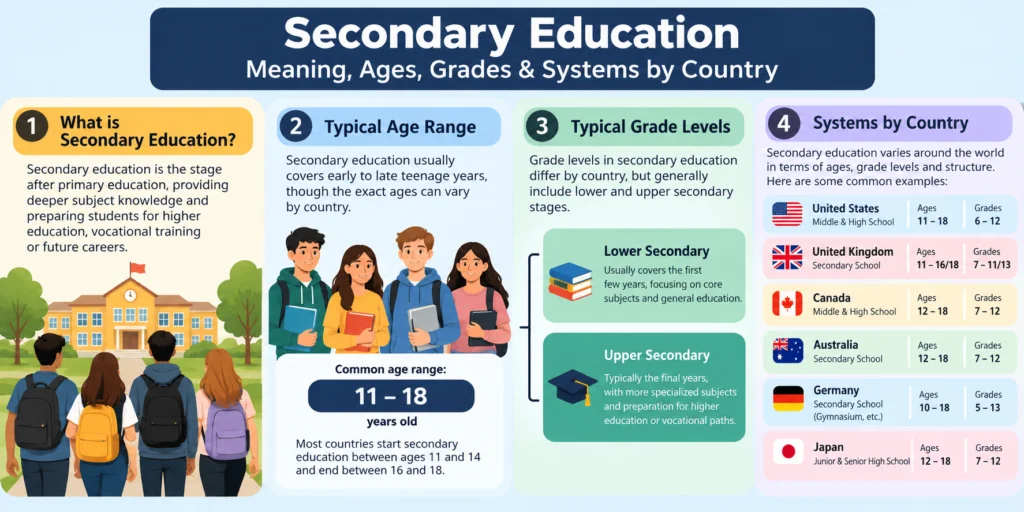
National education systems are usually divided into stages such as early childhood education, primary education, lower secondary education, upper secondary education, and higher education. The names and boundaries are not universal. Primary education may last four, five, six, or more years, while secondary schooling can be organized as one continuous stage or divided into lower and upper levels. Some countries also separate students into academic, technical, or vocational routes during secondary education.
Compulsory education is another major point of difference. Countries set their own legal starting ages, required years of attendance, and rules on when compulsory schooling ends. Compulsory education may cover only primary and lower secondary school in one system while extending into upper secondary education in another. Preschool participation can also be voluntary, legally required, publicly funded, or organized differently by region.
School Levels and Student Transitions
The route between school stages can be automatic or depend on examinations, grades, school recommendations, available places, or student choice. Some systems have a common curriculum for most of compulsory schooling. Others introduce separate academic and vocational tracks earlier. The terminology used for these stages also varies, which is why direct country comparisons work best when education levels are matched by function rather than by name alone.
Examinations and Qualifications
National and regional examinations can determine progression to upper secondary school, graduation, university eligibility, or admission to particular programs. Other countries rely more heavily on school-based assessment or combine coursework with external examinations. A school-leaving certificate may provide broad university access in one country but require additional entrance testing in another.
Vocational Education and University Routes
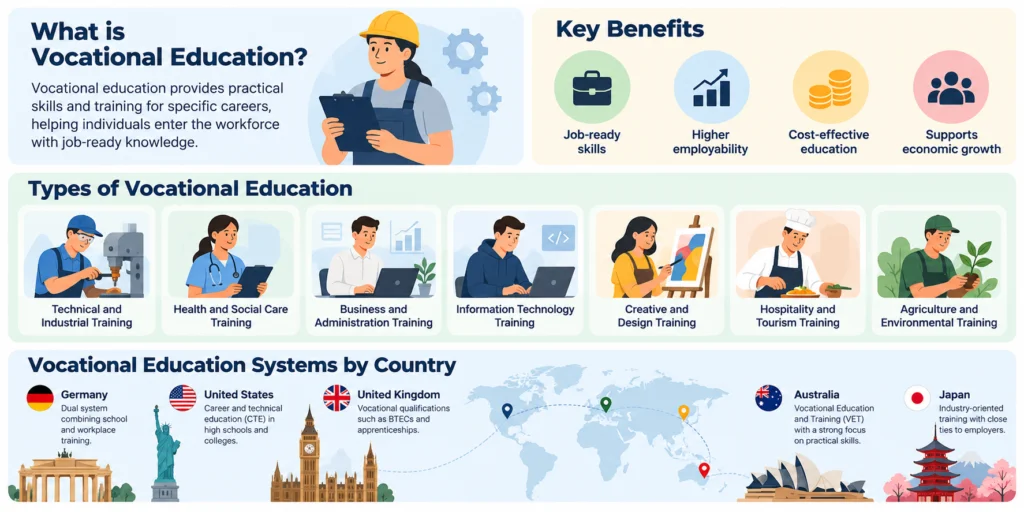
Vocational education can be delivered through secondary vocational schools, technical colleges, apprenticeships, employer-based training, or programs that combine school and workplace learning. These routes may lead directly to employment, but many systems also provide progression into higher vocational education or degree programs.
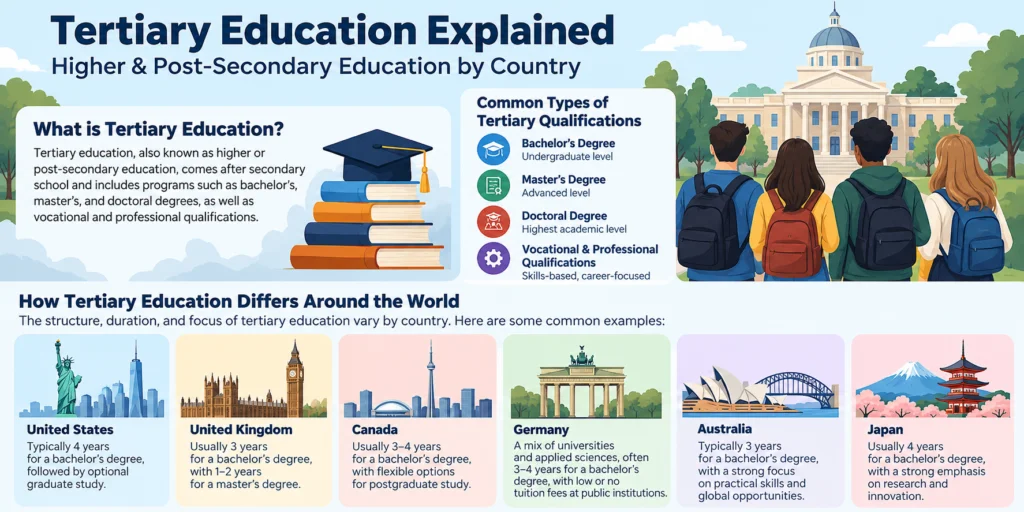
Higher education structures vary in the types of institutions available and the qualifications required for entry. Universities, universities of applied sciences, colleges, vocational higher-education institutions, and specialist schools can occupy different positions within each national system. Admission may depend on school-leaving qualifications, national entrance examinations, subject prerequisites, competitive selection, or combinations of these measures.
Compare Education Systems by Country
Country comparisons are most useful when the same parts of each system are placed side by side. The comparison pages examine areas such as compulsory schooling, school stages, examinations, vocational pathways, higher education, and available performance measures. This makes it possible to distinguish structural differences from differences in terminology and to see where two national systems follow similar or different routes.
Open the education system comparison page to select two countries and view their profiles together.
Latest Education Research and Comparisons
- Vocational Education: Meaning, Types & Systems by Country
- Tertiary Education Explained: Higher & Post-Secondary Education by Country
- Secondary Education: Meaning, Ages, Grades & Systems by Country
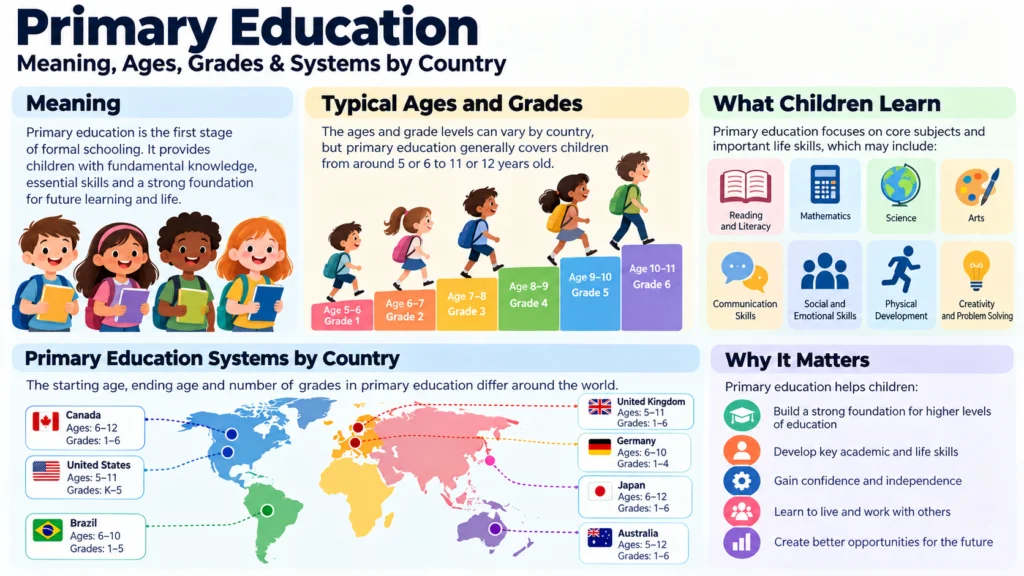
- Primary Education: Meaning, Ages, Grades & Systems by Country
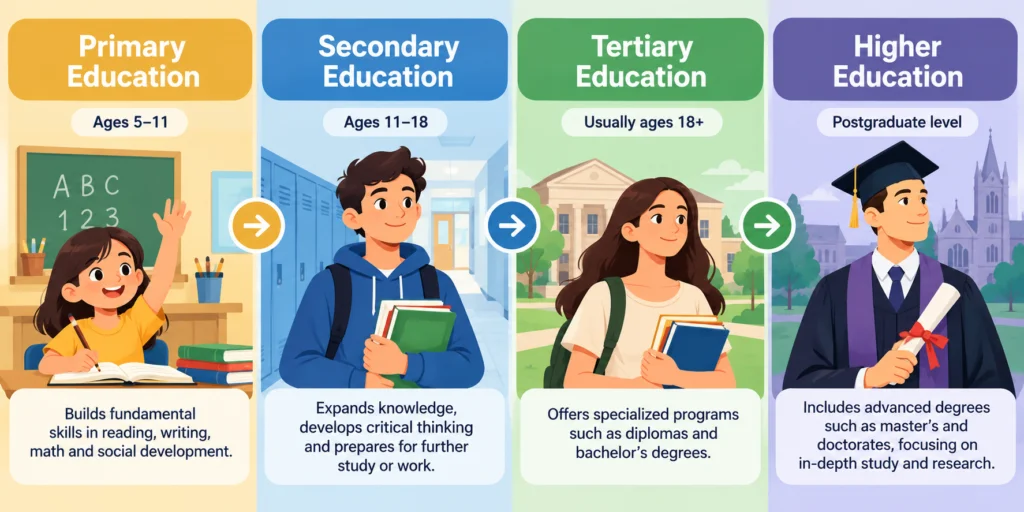
- Education Levels Explained: Primary, Secondary, Tertiary & Higher Education
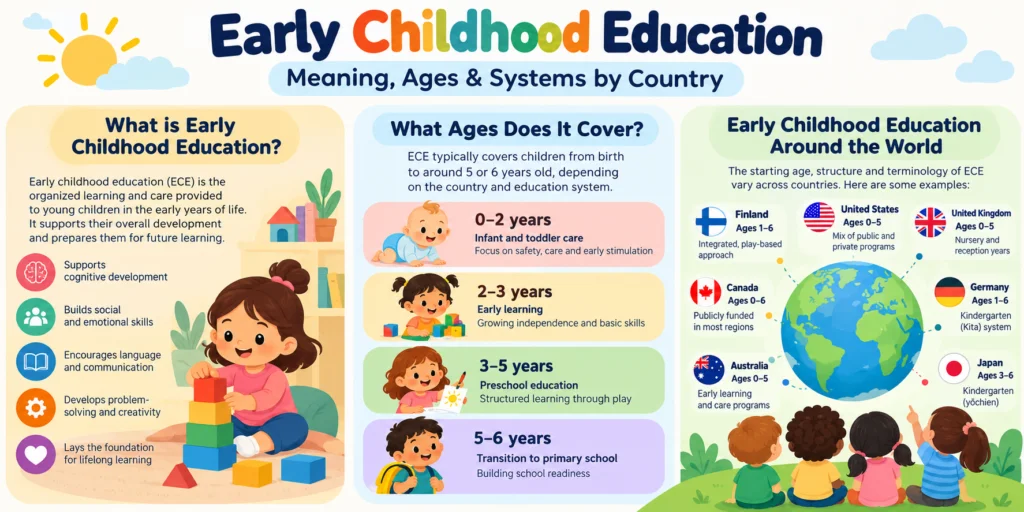
- Early Childhood Education: Meaning, Ages & Systems by Country
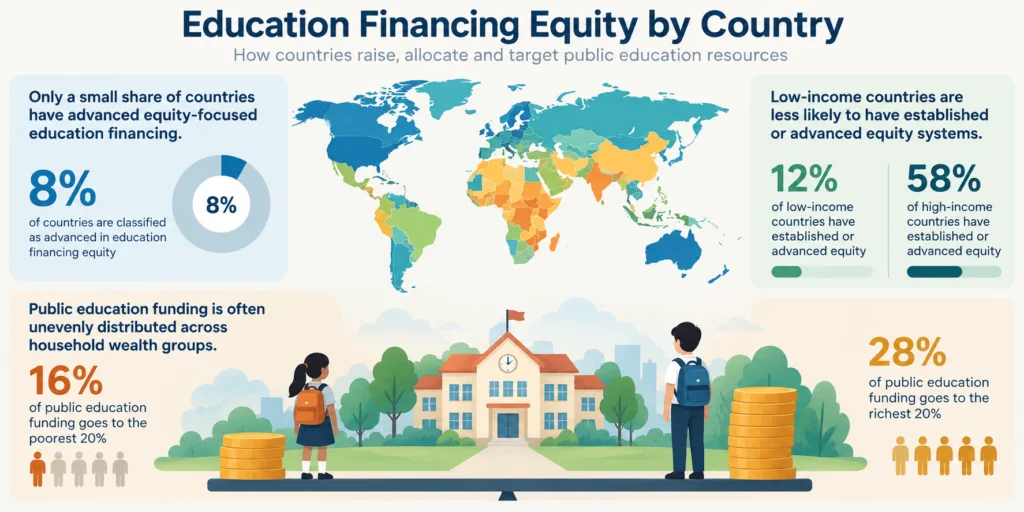
- Education Financing Equity by Country
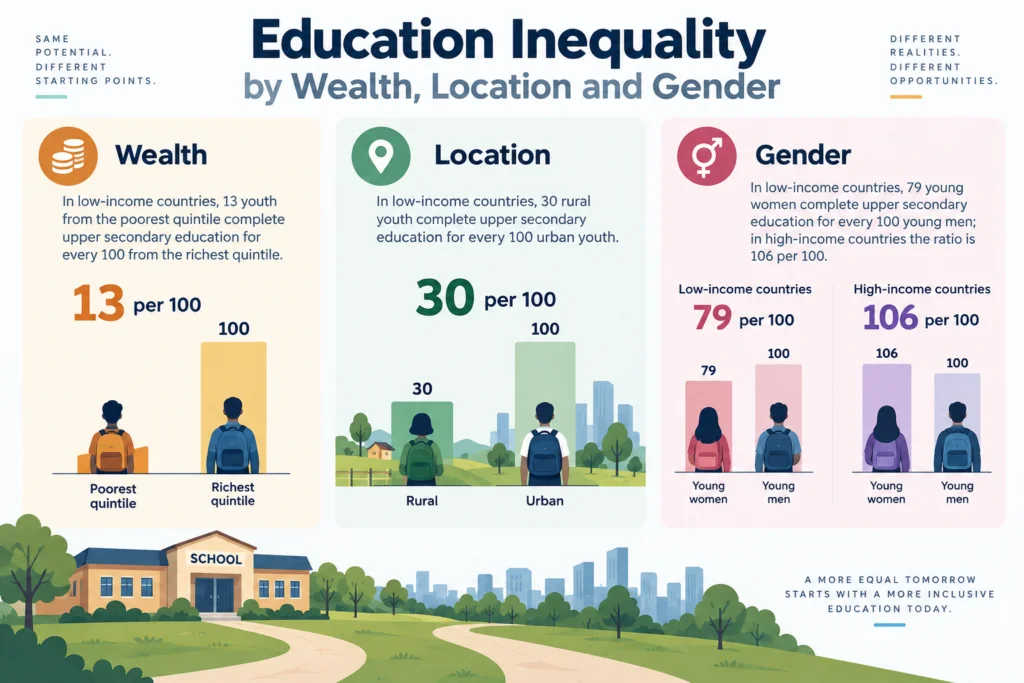
- Education Inequality by Wealth, Location and Gender
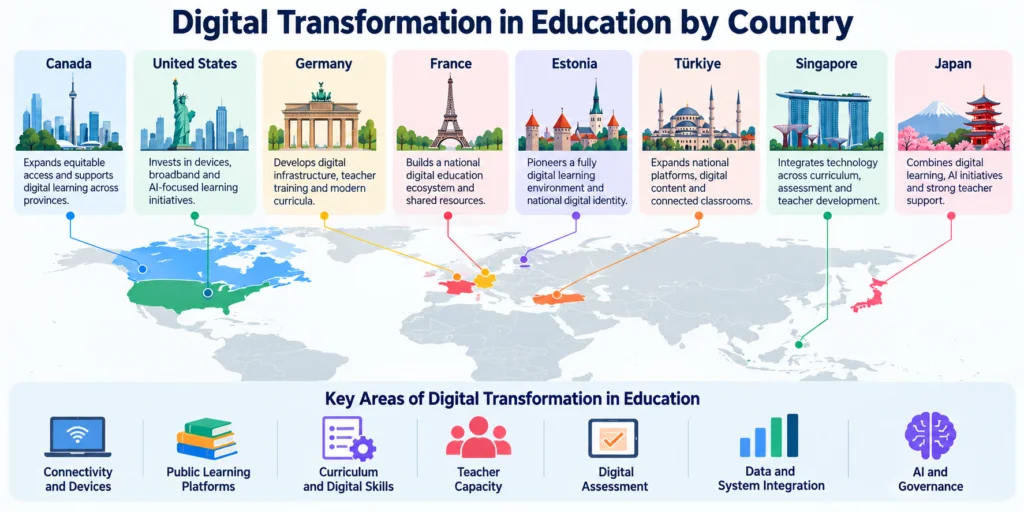
- Digital Transformation in Education by Country
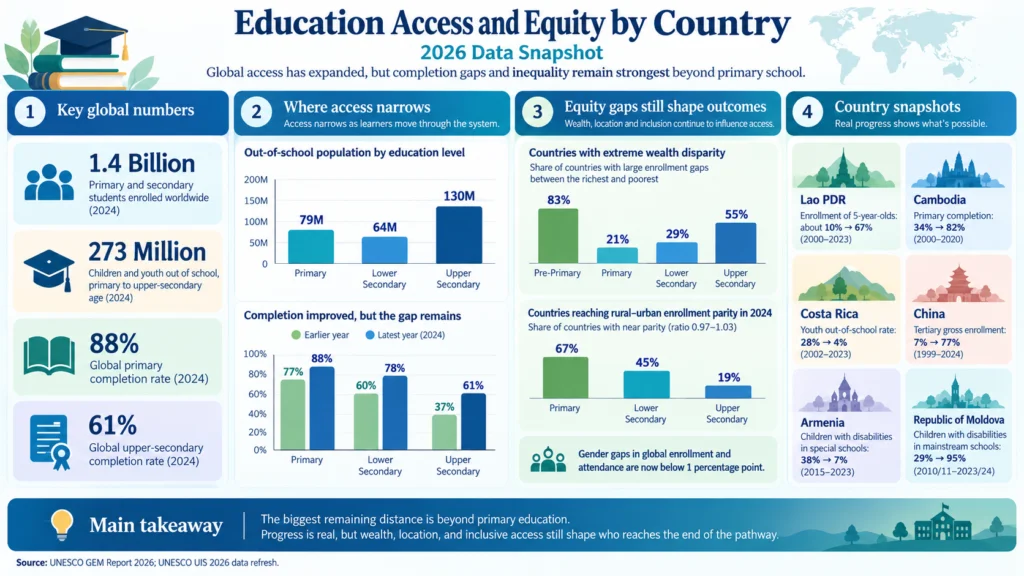
- Education Access and Equity by Country: 2026 Data