Skip to content

Education Types

Secondary Education Meaning, Ages, Grades & Systems by Country

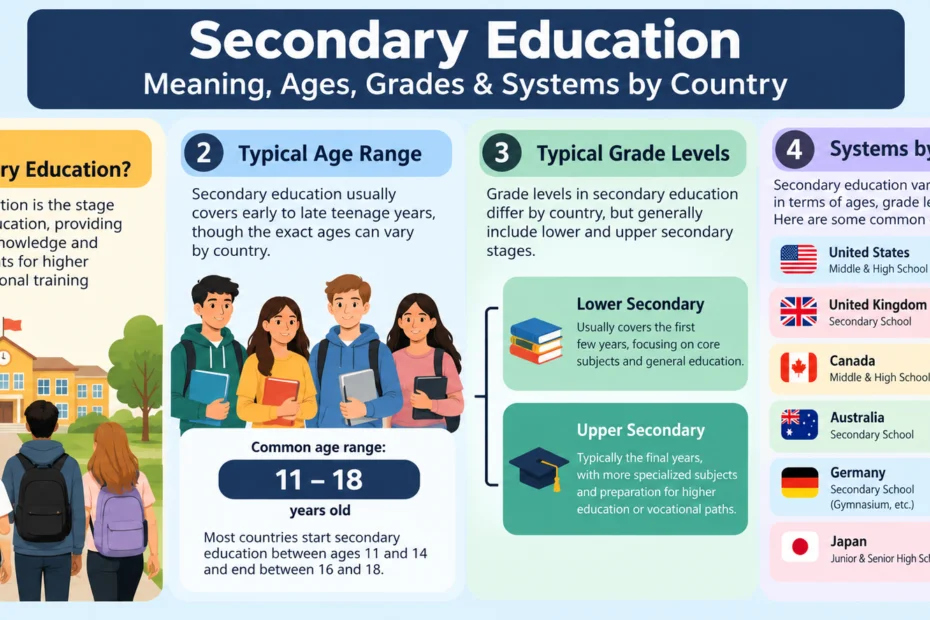
Secondary Education: Meaning, Ages, Grades & Systems by Country

Secondary education is the stage of formal education that follows primary schooling and leads toward post-secondary study, tertiary education, vocational training, or employment. Internationally, it usually includes lower secondary education and upper secondary education, but the ages, grade numbers, school names, program routes, and compulsory-school rules differ by… 
Primary Education Meaning, Ages, Grades & Systems by Country

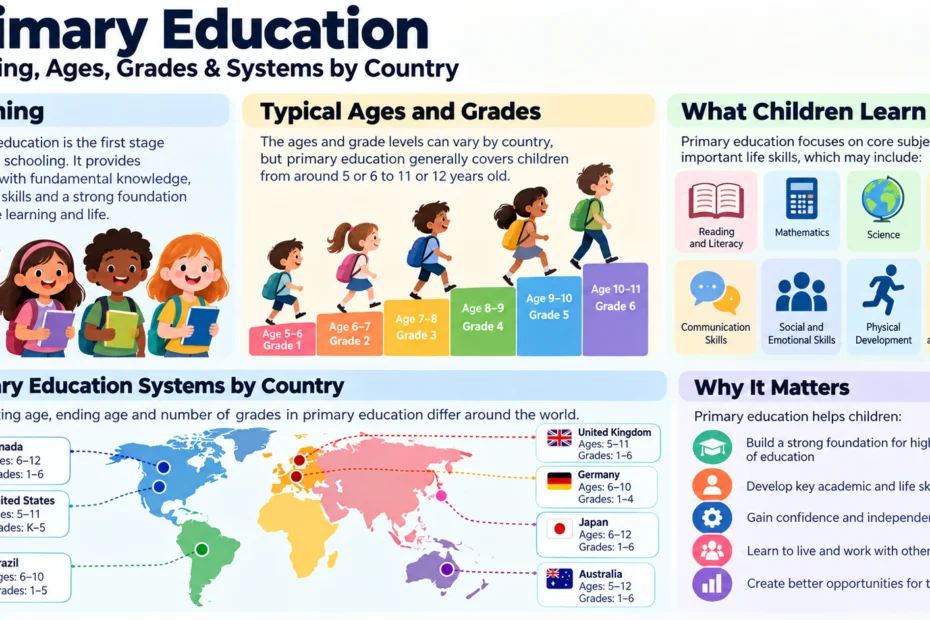
Primary Education: Meaning, Ages, Grades & Systems by Country

Primary education is the first main stage of school-based learning after early childhood or pre-primary education. In international statistics, it is usually classified as ISCED Level 1. Its purpose is to develop literacy, numeracy, core knowledge and general learning skills before students move into lower secondary education. UNESCO… 

Education Levels Explained Primary, Secondary, Tertiary & Higher Education

Education Levels Explained: Primary, Secondary, Tertiary & Higher Education

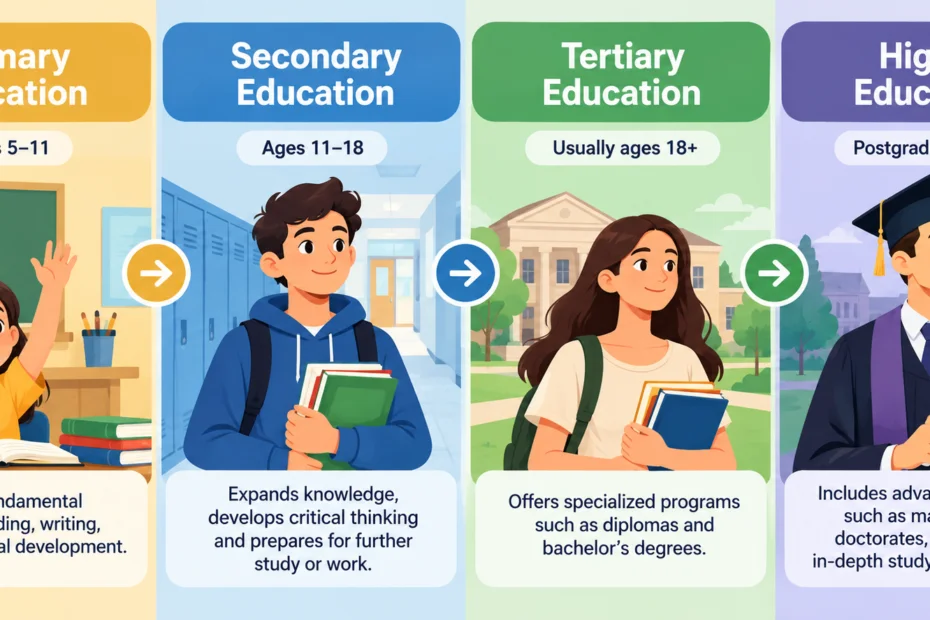
Education systems use different school names, grade structures, entry ages, and qualification titles, so terms such as primary school, secondary school, college, and university do not map perfectly from one country to another. For international comparison, the most reliable reference is the International Standard Classification of Education (ISCED),… 

Early Childhood Education Meaning, Ages & Systems by Country

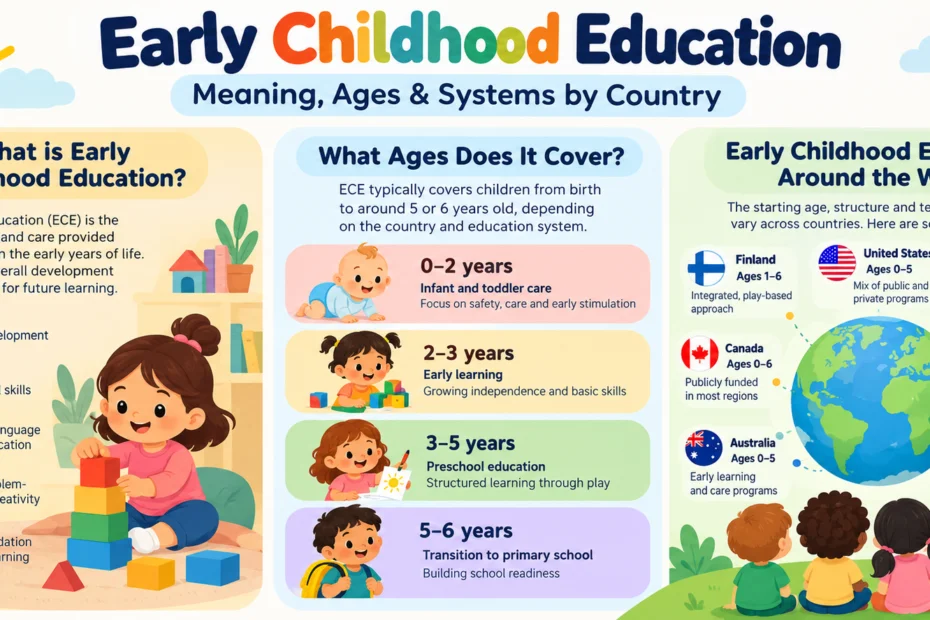
Early Childhood Education: Meaning, Ages & Systems by Country

Early childhood education does not have one universal age range or one universal institutional model. A three-year-old may be in childcare in one country, formal pre-primary education in another, and compulsory education in a third. The same label can also mean different things: preschool, nursery, kindergarten, pre-K, reception,…